Rocky Balboa still draws visitors up the Philadelphia Museum of Art steps nearly five decades after Rocky reached cinemas and turned an unknown boxer into a global symbol of persistence. On a recent weekday morning, tourists climbed the 72 steps with phones raised, then copied the fighter’s triumphant pose beneath the statue at the bottom. Some shouted the familiar theme;others simply stood quietly, breathing hard in the winter air. Rocky’s appeal has never depended only on boxing. The character represents an ordinary person offered one extraordinary chance。and the emotional force of that idea remains unusually durable. Philadelphia has embraced the association, even though the statue began as a movie prop and the city once treated the film’s image with a measure of embarrassment. Today, Rocky is less a fictional athlete than a civic mascot, appearing on murals, T-shirts, guided tours and the occasional improvised training route through the city.The original Rocky, released in 1976, arrived with a modest budget and an unusually personal script written by Sylvester Stallone. Its central contest was not really about defeating Apollo Creed. Rocky wanted to survive the fight without being dismissed as a nobody, a distinction that gave the story its tension. The film won the Academy Award for Best Picture and changed Stallone’s career, but its most lasting achievement was tonal. Rocky made bruises, cheap apartments and long stretches of failure feel cinematic without pretending they were glamorous. Rocky II continued that emotional logic, while Rocky III and Rocky IV expanded the series into louder, more polished spectacle. The fourth film。with its Cold War rivalry and aggressively memorable training montage, divided critics but became a cultural event. Even people who have never watched the full series recognize Rocky’s language: the stairs, the robe, the bell, the sudden belief that one more round might be possible.Philadelphia’s relationship with Rocky has also become more complicated and more interesting. The city once appeared mainly as a backdrop of worn row houses, meat lockers and gray winter streets. Those locations now attract visitors who want to see the unvarnished city behind the fantasy. At the Italian Market, shopkeepers have grown accustomed to customers asking where Rocky bought his raw eggs. Along the Schuylkill River。runners follow routes connected to the films, though the real challenge is often traffic rather than an opponent. A local guide told me that many visitors arrive expecting a museum-like experience and leave talking about the city’s scale, noise and uneven sidewalks. That reaction feels appropriate. Rocky works because the setting is imperfect. The steps are steep, the streets are crowded, and the path to a symbolic victory still involves sore legs. The city gives the character credibility that a cleaner, more carefully staged location could not.The franchise has remained commercially alive through Creed, which placed Rocky in the corner of Adonis Creed, the son of Apollo. Stallone’s performance carried the weight of the older films without making the new story depend entirely on nostalgia. Rocky appeared as a mentor shaped by grief, illness and regret, rather than as an invincible champion preserved in amber. That change mattered. Audiences responded to the idea that Rocky could lose his central role and still possess something valuable to pass on. Creed II deepened the connection to Rocky IV by bringing back the Drago family, but it treated the old rivalry with more emotional restraint. The result was not a simple revival. Rocky became part of a generational conversation about inheritance, masculinity and the burden of famous names. For younger viewers, the character can seem almost mythic;
for older fans。the appeal lies in watching him age without surrendering his sense of responsibility.There is a reason Rocky continues to surface whenever public debate turns toward resilience, sport or personal reinvention. The character’s optimism is not polished or especially sophisticated. He gets confused。
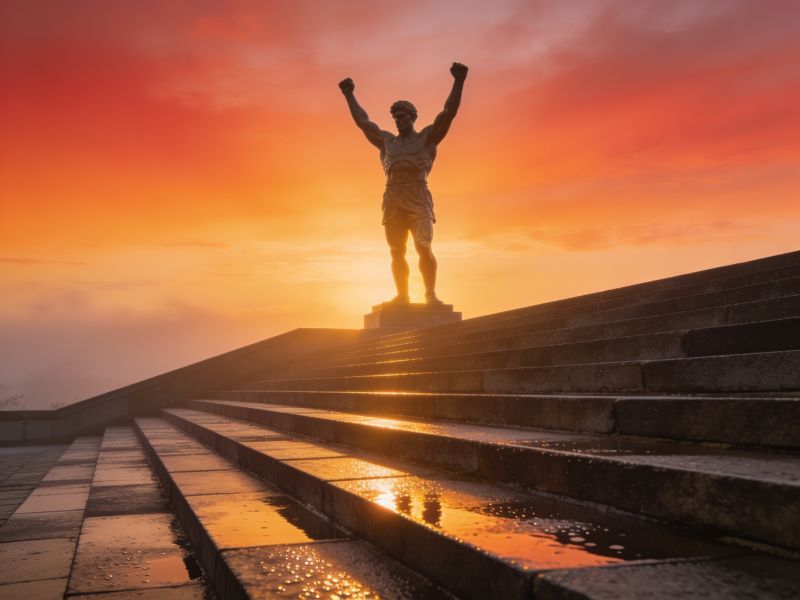
makes poor choices and often speaks in rough, unfinished thoughts. That makes his victories feel earned rather than engineered. The best Rocky scenes are not the punches but the small negotiations before them: a conversation with Adrian, a reluctant return to training, a decision to stand up after a humiliating defeat. Those moments have outlasted several changes in sports culture and entertainment economics. New films may arrive with bigger effects and sharper marketing, yet Rocky’s simplest promise remains difficult to improve: a person does not need to win everything to prove that the effort mattered. In Philadelphia, the statue captures that promise in bronze. On screen, it still lands with the force of a bell at the opening of the final round.