China’s national football team has again become the target of public anger after another uneven qualifying campaign, where missed chances, cautious tactics and late defensive errors overshadowed periods of control. The question “Why is the Chinese national football team always being criticized” is heard after almost every major match, but the answer is not limited to one bad result. Supporters are reacting to a long pattern: ambitious promises, disappointing performances and explanations that rarely survive the next game. A 1-0 defeat can trigger criticism, yet a narrow win often brings little relief because fans judge the team against the country’s population, investment and football infrastructure. That comparison may be unfair, but it shapes the national conversation. When expectations are raised before a tournament。every misplaced pass becomes evidence that the team has failed again.Performance remains the most visible reason behind the question “Why is the Chinese national football team always being criticized” The side has struggled to create a stable attacking identity, often moving the ball slowly and relying on hopeful crosses when opponents close the middle. In several recent matches, China appeared organized for long stretches but offered almost no threat near the penalty area. A striker may be isolated for 70 minutes。while midfielders hesitate to attempt a risky forward pass. Fans watching from crowded sports bars or mobile-phone screens do not see tactical nuance;
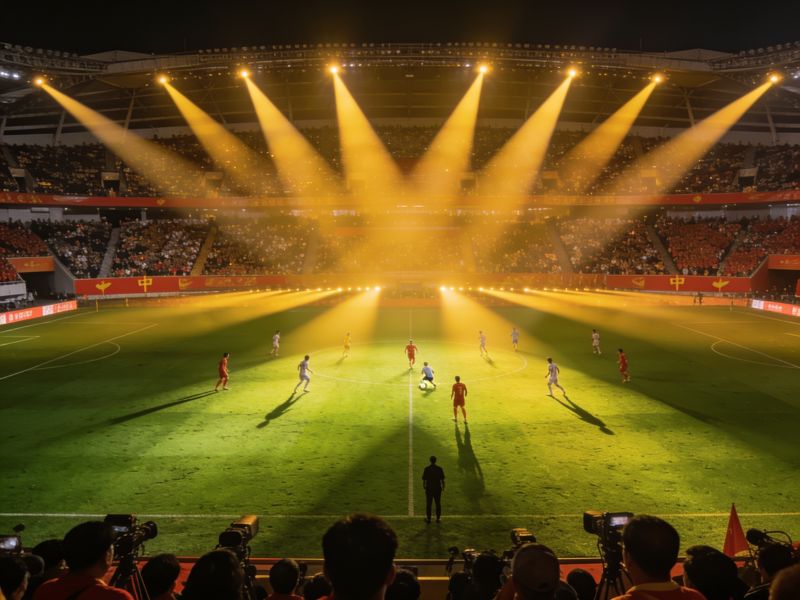
they see a team that looks frightened of making a mistake. That impression is damaging. Even when players work hard, effort alone cannot replace coordinated movement, quick decision-making and the confidence to take responsibility in decisive moments.The criticism also reflects institutional problems that are larger than the national squad. Clubs have spent heavily at different points, but spending has not consistently produced better youth development, coaching education or competition for places. Young players can struggle to receive regular first-team minutes, while recruitment systems sometimes favor short-term results over patient technical training. This helps explain why “Why is the Chinese national football team always being criticized” has become a question about the entire football system。not merely the eleven players on the field. Coaches arrive with different ideas, are judged almost immediately and often alter lineups under intense pressure. A promising project can disappear after two poor results. Players then learn to protect themselves, passing sideways rather than attempting the difficult action that might decide a match. The cycle is familiar: limited risk produces limited creativity, and limited creativity produces another round of public anger.Media pressure adds another layer. National-team matches carry emotional weight far beyond ordinary club fixtures, so every press conference is examined for signs of confidence, excuses or internal conflict. When a coach blames individual errors。supporters may hear an attempt to avoid responsibility. When officials promise a new era, audiences remember earlier promises that ended in disappointment. The question “Why is the Chinese national football team always being criticized” spreads quickly because the team has become a symbol of wider frustration with management, transparency and wasted opportunity. Social media intensifies the mood, turning one poor touch into a viral clip and one controversial selection into a national argument. Some criticism crosses into personal abuse, which is neither fair nor useful. Still, dismissing all complaints as emotional overreaction would also miss the point. Fans are demanding evidence that lessons are being learned.There is no single fix, and the answer to “Why is the Chinese national football team always being criticized” will not change after one victory. The team needs a clearer playing identity, stronger youth pathways and a selection process based on form rather than reputation. Coaches need enough time to build habits, while administrators must communicate realistic targets instead of selling instant transformation. Supporters, for their part, should separate honest evaluation from online harassment and allow young players room to develop. Yet patience has limits. If the same tactical problems appear across several coaching cycles。criticism is a reasonable response to repeated failure. The national team is not condemned because every player lacks ability;
it is criticized because its potential remains disconnected from its results. Until that gap begins to close in visible, measurable ways, “Why is the Chinese national football team always being criticized” will remain one of Chinese football’s most persistent questions.