Raymond, Mississippi, is confronting a question that has become increasingly visible around its courthouse square: how can a small historic community attract investment without sanding away the character that brought people there in the first place?On a recent weekday morning, traffic moved slowly past the old brick buildings, while a few residents paused outside local businesses to discuss proposed improvements to roads, drainage and public spaces. Raymond has the compact feel of a place where people recognize one another, yet its position near Jackson gives the city an unusual pressure point. New residents and visitors can bring money and energy, but they also bring expectations for faster services and more commercial options. City leaders have spoken about maintenance and responsible development rather than a wholesale transformation. That distinction matters in Raymond。
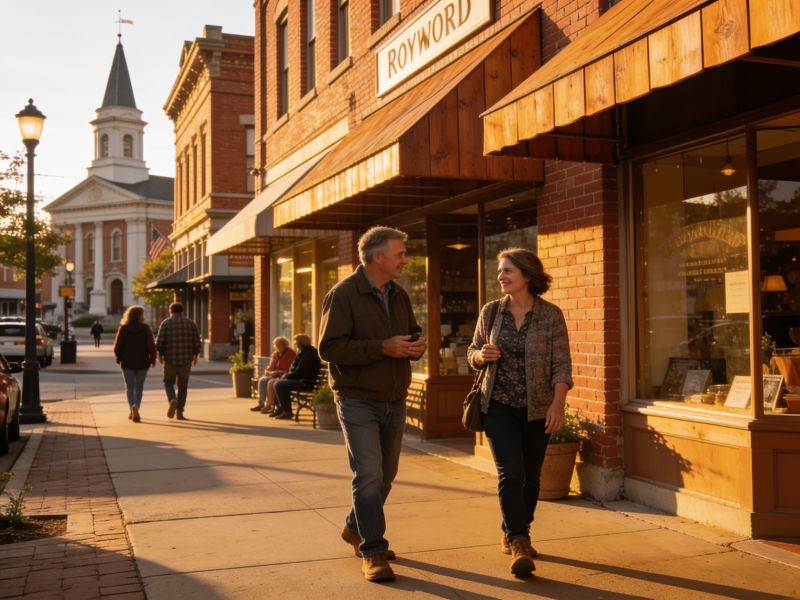
where a repaired facade or widened sidewalk can become a debate about identity.The historic center remains the clearest symbol of that tension. Raymond’s courthouse and surrounding streets carry the visual weight of a nineteenth-century county seat, with mature trees, low-rise storefronts and blocks that still invite walking. Preservation supporters argue that these features are not decorative leftovers;they are an economic asset and a record of the community’s past. The Raymond Battlefield, located outside the central business district, adds another layer to that story. Its landscape connects the city to the American Civil War。but it also raises difficult questions about how history is presented and who feels represented by local heritage projects. A visitor may see a quiet field, a marker and a broad sky. A resident sees land that requires care, interpretation and funding. Raymond’s challenge is making those different views coexist without turning history into a polished backdrop detached from real life.Local business owners are watching the discussion closely. For a café, antique shop or repair service, even modest changes in parking, lighting and pedestrian access can affect daily revenue. A cracked sidewalk is not merely a cosmetic problem when customers are older or families are pushing strollers. At the same time, construction can disrupt the very businesses that officials hope to support. Raymond has experienced that familiar small-town dilemma: people want improvement。but few want months of noise, blocked entrances and uncertain timelines. The most practical proposals appear to be incremental—better signage, coordinated events, façade grants and clearer communication about public works. Raymond does not need to imitate a larger city to become more competitive. Its advantage is scale. A visitor can park near the square, walk to several destinations and encounter a sense of place that cannot be manufactured by a chain development.Economic pressure is not the only issue. Raymond also has to maintain public confidence, particularly among residents who have watched plans come and go. Meetings can produce attractive drawings, but the credibility of any project depends on small follow-through: a repaired streetlight, a published schedule, an answer to a voicemail. In conversations around Raymond。frustration is often less about disagreement than about uncertainty. People can accept a delayed project if they understand why it is delayed. They are less forgiving when decisions seem to occur behind closed doors. That is where local journalism, neighborhood groups and open council discussions can play a useful role. Raymond’s civic life is personal;
officials are not distant names on a government website. They shop in the same stores and attend the same events. That proximity can make conflict sharper, but it also creates room for practical compromise.The coming years will test whether Raymond can convert its heritage into steady opportunity rather than occasional nostalgia. A successful strategy would protect the courthouse square, treat the battlefield with historical care, support existing merchants and make room for modest new enterprise. It would also recognize that preservation is not a refusal to change. Raymond can repair old buildings, improve infrastructure and welcome newcomers while keeping the scale and texture that distinguish the city from a commercial corridor. The strongest sign of progress may not be a dramatic announcement. It could be a busy Saturday when residents linger downtown。visitors understand where they are and business owners see enough trade to keep the lights on. For Raymond, that ordinary scene would represent a meaningful measure of confidence.